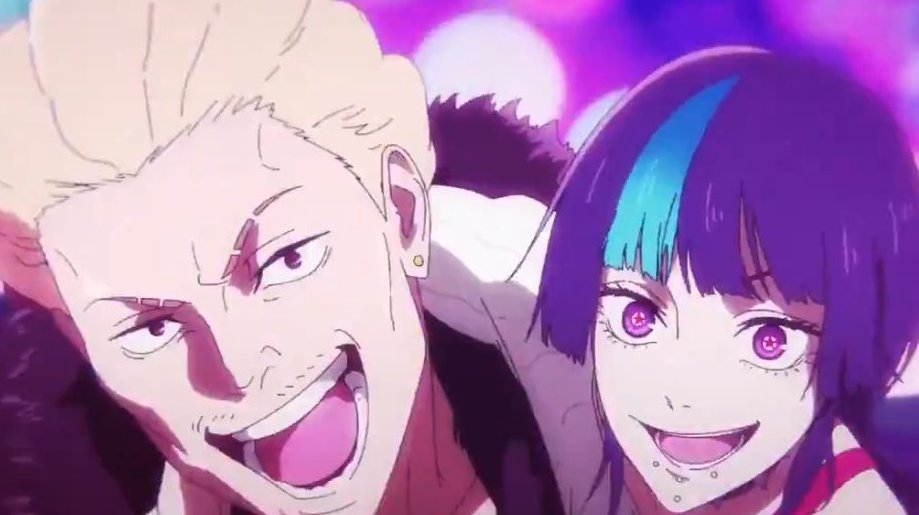
A couple of weeks ago, I saw a post claiming that Gege Akutami, the creator of Jujutsu Kaisen, had confirmed Kinji Hakari’s ethnicity. The post said Hakari was confirmed to be “blasian”—meaning Black and Asian.
With Jujutsu Kaisen’s sequel JJK Modulo currently running on Shonen Jump and a highly anticipated Season 3 airing weekly during the first half of 2026, it didn’t sound completely far-fetched that Gege might have given an interview around this time.
Unfortunately, the interview was completely fabricated, and there is still no official confirmation of Kinji Hakari’s race.

Is Hakari Black?
Short answer: no.
Long answer: maybe.
There’s no official statement from Gege Akutami confirming that Hakari is Black. That said, if you thought he was (I did), that’s completely understandable based on how he’s portrayed.
In Jujutsu Kaisen Season 1, Hakari appears briefly alongside Yuta during a Gojo flashback. He has short black dreads and tanned skin. In the manga version of this scene, he has a similar hairstyle with a low taper.

The next time we see him is during the Culling Games, where he’s running an underground fight club. His hair is grown out—presumably still locked—and dyed purple. He also has slits in his eyebrows.

Later, during his fight with Charles Bernard, Hakari is dressed in a hoodie, jeans, and what looks very much like Timberland boots.

During the final battle of the series, he’s wearing a similar outfit—except this time, he’s rocking Air Force 1s.

All of that is to say: if you assumed Hakari was Black (again, I did), I get it.
A friend of mine pointed out that there are Japanese people who are huge fans of African American culture. They keep up with trends, fashion, and even wear dreadlocks. So it’s entirely possible that Hakari isn’t Black at all.

He looks a lot like my uncle, which probably skewed my perspective.
Is Kirara Hoshi a Boy?
This one feels more sensitive, but it’s actually pretty straightforward—unless future anime translations change things.
At first, Panda explicitly states that Kirara is a boy (Jujutsu Kaisen, Chapter 154). When Kirara is introduced, though, they present in a stereotypically feminine way. Later, Gege includes an official illustration of Kirara in junior high, where they appear more masculine.

During the confrontation between Megumi, Panda, and Kirara, Kirara is only referred to by name and with they/them pronouns.
The final piece of context comes from Hakari himself. While riding an amusement park ride with Charles, he says things like:
- “Who wants to ride a Ferris wheel with a dude?”
- “I wanted to scope this place out in case I ever bring a babe.”
What we can say for certain is that Kirara no longer identifies as a boy. If they did, Hakari wouldn’t be romantically involved with them.
At the same time, we don’t have confirmation that Kirara identifies as a woman either. So the most accurate conclusion is that Kirara is nonbinary.
Is Hakari Gay?
Hakari references an ex-girlfriend who once maxed out his credit cards. He openly dislikes romantic situations with men. Kirara presents femininely and is nonbinary.
Definitions matter here:
- Heterosexual: someone attracted to people of the other sex
- Other: something different or distinct from what’s already mentioned
- Nonbinary: a gender identity that isn’t male or female
Since Kirara is nonbinary and exists outside the traditional gender binary, they could reasonably fall under “other.” That would still place Hakari under the heterosexual umbrella.

So, in Conclusion:
- Is Hakari Black? No
- Is Kirara a boy? No
- Is Hakari gay? No
- Is any of this really our business? Also no
Hope this clears things up.





Leave a Reply